|
|
Sparta is most commonly known today as
the militaristic rival of "enlightened" Athens in ancient Greece.
It is remembered for its military accomplishments—particularly the
heroic defence under King Leonidas of the Pass at Thermopylae against
the Persian Invasion in 480 BC and for its crushing defeat of Athens in
the Peloponnesian War. Images of harsh discipline, a merciless
emphasis on courage and a society lacking art, literature and culture
predominate in popular literature and non-specialist education.

In fact, ancient
Sparta—or Lakedaemon as it was known in
ancient Greece—was far more complex and multifaceted. In fact,
Plutarch goes so far as to claim that "devotion to the intellect is
more characteristic of Sparta than love of physical exercise."
A quick look at the broader picture:
 |
Sparta
was the first democracy in recorded history, possibly predating
Athenian democracy by more than 200 years. (Most historians,
however,
date it 50
to 100 years before Solon in Athens.)
|
|
Sparta was the only Greek city-state
to introduce a land reform aimed at equalising wealth among its
citizens.
|
|
Sparta was the first
and only Greek city-state to develop a complex system of mutual defence
treaties, and it repeatedly intervened to defend democracy against
tyranny.
|
|
Sparta was the only Greek city-state
in which women enjoyed elementary
rights such as the right to inheritance, property ownership and public education.
|
|
The Spartan public educational system,
the agoge, was admired almost
universally by contemporaries, from historians such as Herodotus and
Xenophon to philosophers such as Plato and Aristotle.
|
|
Although Spartans were proud to say
that they built their monuments "in
flesh"—meaning that the virtue and courage of Sparta's citizens were
the greatest monuments a city-state could possess—they were not
lacking in architectural and artistic achievements, as was well
catalogued by the Ancient Greek tour-guide, Pausanias.
|
|
Spartan music and dance were famous
throughout the ancient world, and
the oldest recorded heterosexual love poem was the work of a Spartan
poet praising Spartan maidens.
|
|
Spartan wit and mastery of rhetoric
were so widely admired that ancient
Greek scholars collected "Spartan sayings" and the "Laconic" style of
speech was studied and imitated in intellectual circles. |
In short, in the
ancient world Sparta was admired as
much for its constitution, its system of education and its music/dance as
it was for its famous hoplites. Not her kings, but her citizens—the
lawgiver Lycurgus, the statesman and philosopher Chilon and the poet
Tyrtaios—were the most widely admired Spartans in ancient times.
But Sparta was
eclipsed by the rise of Athens, a city
with roughly five times the number of citizens and, by the early 5th
century, an Empire. Sparta's once revolutionary and innovative
institutions became calcified while democracy continued to develop in
other cities. Its artistic achievements stagnated as the population
declined and the demands of power following Sparta's victory in the
Peloponnesian War grew. But the decline of Sparta starting in the
5th century BC should not entirely obscure its early accomplishments.
This site is
dedicated to throwing some light on those
forgotten achievements—and hopefully awakening more curiosity and
understanding for a complex and fascinating ancient culture.
In addition,
based on the research that went into this
site, I have written a series of novels which—adding imagination and
an understanding of human nature to historical research—attempt to
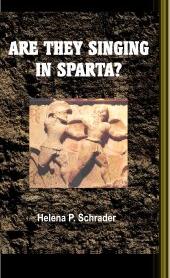
bring Archaic Sparta back to life. Three are now available for purchase. Are They Singing in Sparta?
describes the Revolution which led to the introduction of Sparta's
unique constitution (the first democracy in recorded history) and the
Second Messenian War (critical to the understanding of all subsequent
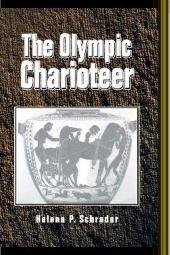
Spartan foreign policy). The Olympic Charioteer
is the story of a slave and Olympic competitor in the age of Chilon the
wise, and focuses on the start of the Peloponnesian League, the first
recorded non-aggression pact in recorded history.
“…an
extremely entertaining novel....Anyone interested in exploring the
years prior to the Persian invasion – the alliances and
intrigues, especially between Sparta and her future ally Tegea
– will enjoy this novel.”
Jon
Martin, author of The
Headlong God of War and In Kithairon’s
Shadow
“…this is another gem to polish and keep in my
bookcase when I want a look back to Greece!”
Millien
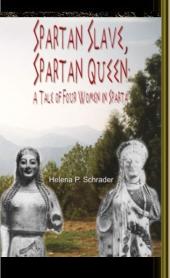
Be sure also to read, Spartan
Slave,
Spartan Queen: A Tale of Four Women. This book is a
continuation of the saga that started with Are
They Singing in Sparta?
The first in a trilogy of biographical
novels about Leonidas, A
Boy of the Agoge, is scheduled for release later
this year. Watch this site for more details.
Under "Further
Readings"
you will find additional
recommendations for both fiction and non-fiction books, including
selected ancient and modern sources.

|